Home >> News >> Industry News
11th. August, 2026
Quick answer: A perfume box insert has three separate jobs, not one — stabilizing the glass body against impact, protecting the atomizer pump mechanism from shock-induced misalignment, and preventing the insert material itself from scuffing a decorated bottle finish. On top of that, if the bottle glass isn't UV-tinted, the outer box's opacity is doing real fragrance-preservation work, not just branding.
Most perfume box specs treat the insert as a single question: how do we stop the bottle from shattering. That's an incomplete brief. A bottle can survive a drop with the glass fully intact and still arrive at the customer leaking or spraying unevenly, because the part that actually failed wasn't the glass.
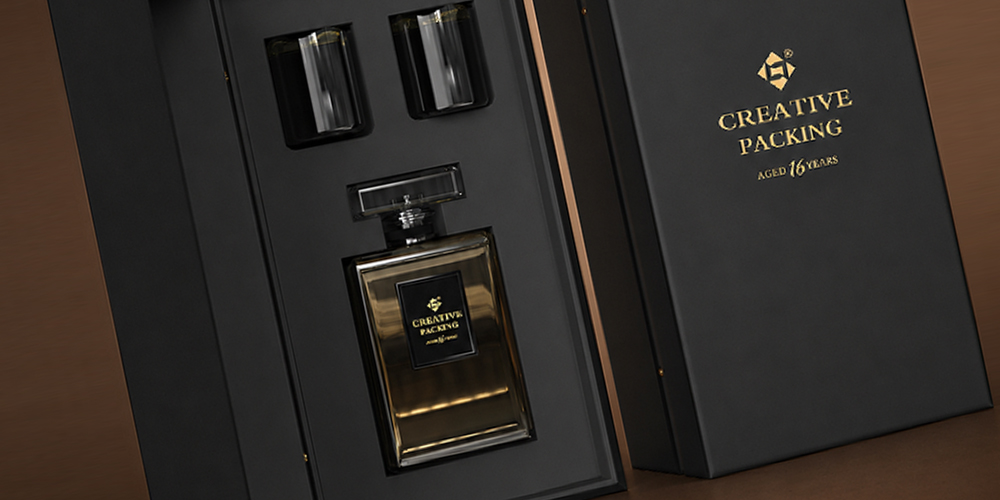
No. The atomizer pump, dip tube, and spray nozzle are mechanically sensitive components, and a sharp impact can misalign the internal spring pump even when the glass body shows no damage at all. An insert that snugly holds the bottle's body but presses directly against the cap or atomizer head transfers shock straight into the most fragile part of the assembly. Recessed or neck-support insert designs — which cradle the body while leaving clearance around the cap and pump — address this directly, and it's a detail that's easy to miss when an insert is evaluated only by how well it holds the bottle still.
Yes, and this becomes more important as finishes get more elaborate. A standard smooth glass bottle with moderate weight generally does fine in a folded paperboard insert. But lacquered, frosted, printed, or metallized bottle finishes — increasingly common on premium fragrance lines — can be scuffed or dulled by rubbing against an insert material that's too coarse or doesn't account for repeated micro-movement during transit. Fabric-wrapped or smooth-finish inserts reduce that risk. For heavier or irregularly shaped glass, EVA foam or molded pulp gives better retention than folded paperboard alone, regardless of finish.
Often, yes — and this is the part that gets overlooked most. UV exposure drives photo-oxidation in fragrance oils, and citrus-forward top notes are particularly vulnerable; noticeable degradation can occur within about a month of regular light exposure for unprotected formulations. Brands that choose clear flint glass for aesthetic reasons, rather than amber or tinted glass, are relying on the outer packaging to do the light-blocking work that the bottle itself isn't doing. In that case, the box's opacity isn't just a branding decision — it's functioning as the fragrance's actual UV barrier during the retail shelf life and any period before first use.
| Bottle Type | Recommended Insert Approach | Why |
|---|---|---|
| Standard shape, moderate weight, clear finish | Folded paperboard | Sufficient retention without added cost |
| Heavy or irregularly shaped glass | EVA foam or molded pulp | Better shock absorption and retention than folded board alone |
| Lacquered, frosted, printed, or metallized finish | Fabric-wrapped or smooth-finish insert | Prevents surface scuffing from micro-movement in transit |
| Tall cap or protruding atomizer | Recessed or neck-support insert | Keeps shock away from the pump mechanism |
| Clear (untinted) glass | Opaque or UV-resistant outer box material | Box becomes the primary light barrier for the fragrance |
Can one insert design work across an entire product line with different bottle shapes?Generally no, if the bottles vary meaningfully in weight, height, or cap style — a single generic insert tends to underperform for whichever SKU it wasn't actually designed around.
Does a heavier, more expensive bottle need a more expensive insert?Not automatically more expensive, but it does need a different approach — foam or molded pulp rather than folded paperboard, which is a construction choice, not simply a cost upgrade.
If our bottle is already UV-tinted glass, does box opacity still matter?It matters less for light protection specifically, but the box may still be relevant for the product's overall shelf stability and presentation — the light-barrier function is simply not doing extra work in that case.
A perfume box insert is judged on three separate failure modes, not one, and specifying it around glass breakage alone leaves two of them unaddressed. Creative Packing engineers custom perfume boxes with insert material and structure matched to the actual bottle — its weight, its finish, and its cap design — not a generic foam block.
Read more:
Previous: None
NEXT: None
Phone: +86 13538511868
E-mail: [email protected]
No. 13 Zhan North Road, Baisha Village, Humen Town,Dongguan City, Guangdong Province, China