Home >> News >> Industry News
25th. May, 2026
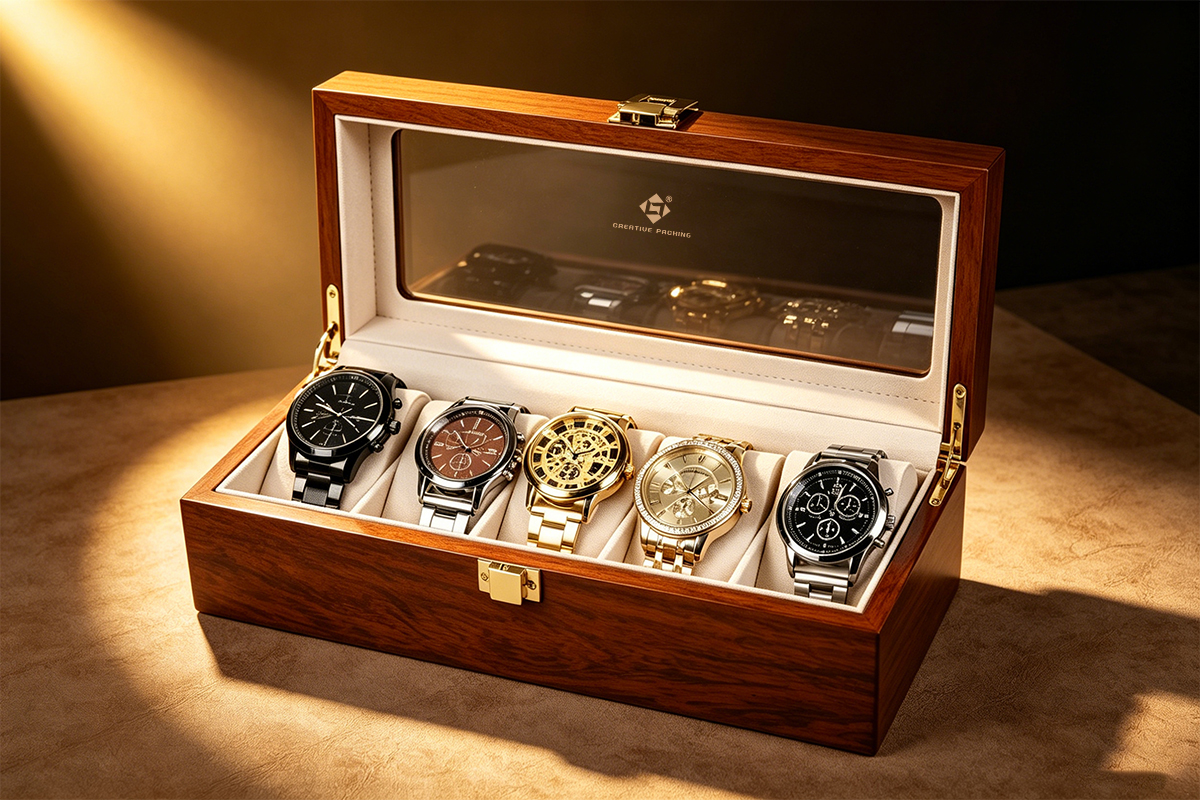
When a watch brand decides to launch a new model or refresh its packaging, the watch box design process is one of the first steps. Yet many brands still treat the packaging as a “once‑off” task rather than an integrated design and engineering workflow. In reality, a well‑designed watch box goes through multiple stages: concept, structure, sample, validation, and mass production. Understanding this workflow can help brands select the right partner and reduce the risk of costly delays or mistakes.
1. Why structure matters more than most people think
A watch box is not a flat design file; it is a structural object that must protect the watch, fit inside retail displays, and sometimes travel across continents. The box structure must take into account:
l Internal dimensions (to fit the watch case diameter and height).
l Tolerance and cushioning (to allow for movement without damage).
l External dimensions and profile (to match retail shelves and e‑commerce standards).
A poorly defined structure can lead to:
l Watches that rattle or move inside the box.
l Excessive thickness or weight that makes shipping expensive.
l Misalignment of branding or graphics due to fold lines and seams.
For this reason, the first phase of any project should be an in‑depth technical discussion between the brand and the packaging supplier. This discussion should cover:
l Target markets and channels.
l Expected number of units and production timelines.
l Preferred materials and budget constraints.
l Branding and printing expectations.
Once these parameters are clear, the design team can start working on structural drawings, 3D renders, and mock‑ups.
2. The concept and CAD stage
Modern watch box design usually begins with 2D concept sketches or 3D digital renders depending on the complexity of the project. For simple single‑watch boxes, 2D layouts that show the net design and folding lines may be enough. For multi‑layer or multi‑watch boxes, 3D modeling is essential to visualize how the box will open and close in real life.
During this stage, the designer focuses on:
l Box opening style (top lid, magnetic closure, drawer, dual‑layer, etc.).
l Internal layout (position of the watch, inner pockets, and filler).
l Ridge and fold positioning to avoid misalignment of printed elements.
It is also at this stage that the team decides on material suitability—whether to use wood, paperboard, metal, or combinations of these. Structural CAD software can simulate how the box will behave under pressure, which helps prevent issues like warping or cracking at later stages.
3. Making the first sample
Once the structural concept is approved, the next step is to produce a physical sample. This is where the design shifts from digital to tangible and becomes a real test of the product.
A good watch box supplier will produce a sample that:
l Matches the agreed dimensions and materials as closely as possible.
l Uses the same or similar production tools that will be used in mass production.
l Allows for testing of opening and closing, fit, and branding reproduction.
For critical projects, brands may request multiple samples with slight variations:
l Different thicknesses of board.
l Alternative lining materials.
l Variations in closure mechanisms or foam hardness.
These samples enable the brand to choose the best configuration before committing to full‑scale production.
4. The revision and approval loop
It is rare for a first sample to be perfect. More often, the brand will request adjustments such as:
l Changes in internal dimensions.
l Adjustments to the tightness or softness of the cushioning.
l Refinements to the position of the logo or other printed elements.
This creates a revision loop between the brand and the factory. A professional supplier will:
l Keep clear records of each change.
l Provide revised drawings or updated samples quickly.
l Maintain consistent quality across revisions.
Once the sample is approved, the team can move to the next stage: template preparation, tooling, and pre‑production trial runs.
5. From sample to mass production
After sample approval, the supplier will finalize the production template, cut the dies, and set up the printing and finishing lines. At this point, the supplier may produce a small trial batch to confirm that:
l All colors and finishes meet expectations.
l The box structure performs consistently across larger volumes.
l Branding and text are printed accurately and aligned.
Any issues discovered at this stage should still be manageable before full‑scale production begins.
Throughout this process, clear communication is essential. The brand should appoint a single point of contact, and the supplier should provide regular updates on sampling progress, material sourcing, and timeline adjustments.
At Dongguan Creative Packing, we support international watch brands through the entire watch box workflow—from concept and CAD drawings to sample production and mass manufacturing. Our team helps clients define the right structure, material, and aesthetic style for their target markets and then translates that into a repeatable, high‑quality production process. Whether you are launching a new watch line or updating an existing packaging system, we can guide you from drawing to delivery.
Related reading:
l How Materials and Finishes Shape the Value of a Watch Box
l Luxury Watch Box Design for the Middle East Market
l How to Choose the Right Watch Box for Luxury Brands
Previous: None
NEXT: None
Phone: +86 13538511868
E-mail: [email protected]
No. 13 Zhan North Road, Baisha Village, Humen Town,Dongguan City, Guangdong Province, China